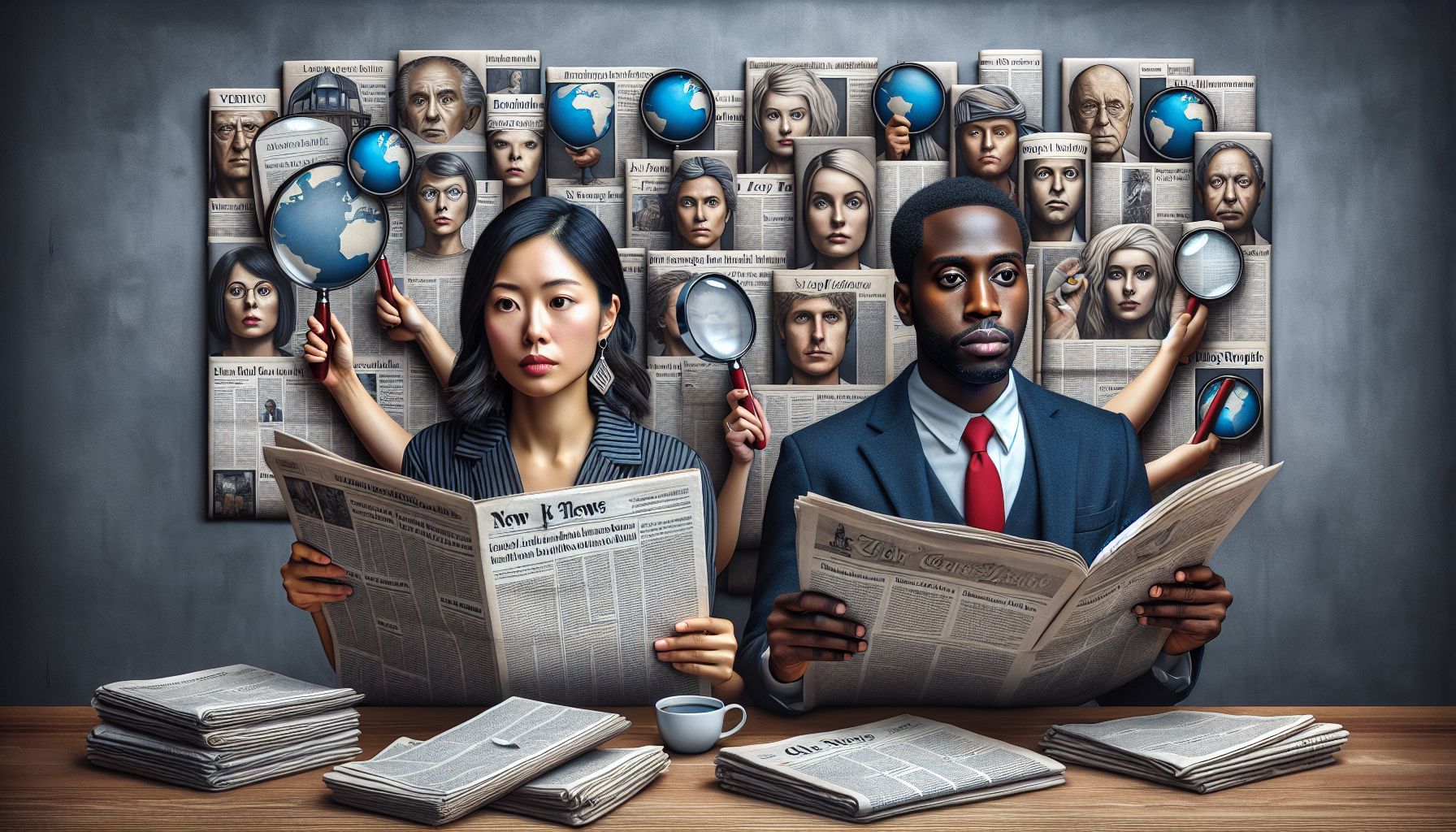
If nothing else, groups like Medialens perform an invaluable service to an otherwise woefully misinformed public pointing out the blatant and not-so-blatant bias in the corporate and state-run media’s coverage of events. Back in the mid-eighties I was involved in Extra!, a publication of Fairness and Accuracy in Reporting (FAIR), a New York-based media analysis outfit which like Medialens also performs an invaluable service in unpacking the inbuilt bias in media coverage of important events.
The question arises however, whether getting the public to write to outfits like the BBC has much effect on their news coverage and analysis? Judging by the events of the past few years, it’s doubtful whether it has had any effect whatsoever, aside from the odd and essentially meaningless retraction, which in any case disappears into the bit bucket, with every acknowledgement of an ‘error’ so hedged in provisos as to undermine any gain achieved.
This is not to say that we should not continue to target the BBC and the rest of the mainstream media, in analysing how the media operates and in whose interests it operates and who it represents.
And indeed, on occasion, for example the furore raised over the use of the ‘statistics’ produced by Iraq Body Count by the BBC revealed that absolutely nothing has changed, with the BBC mounting a vicious red-baiting witch-hunt against Medialens for exposing the spurious nature of the claims made by the IBC and how in turn, they were used to reinforce the prevailing justification for the invasion and occupation.
And we need look no further than the current propaganda campaign being
waged by the BBC over the un-substantiated claims that Iran is behind
the attacks on the occupation forces in Iraq, claims which have been
refuted by the facts but search in vain for an acknowledgement of this
in the news coverage except for the odd mention that is all but
invisible when measured against the bulk of the coverage.
So important is the media to the maintenance of the status quo, that no
amount of bitching and whining will make any fundamental change, this
is a fact that has to be acknowledged for fear of over-estimating our
impact or the importance of challenging their hegemonic control over
the manufacture of news.
FAIR’s stated aim, at least when I was involved in it was to target
media professionals in an effort to get them to recognise the role they
played, for without their active or passive cooperation in the process,
it would be virtually impossible for the MSM to operate as it does.
Easier said than done, journalists perform a vital role in the
maintenance of the ruling order and for which the key players, editors,
sub-editors and leading writers get rewarded handsomely and not only in
material terms for their participation.
By elevating the journalist to the level of a de facto ‘celebrity’ and
over-inflating the importance of the ‘news’, for example 24-hour ‘news’
channels that say the same thing over and over again, our understanding
of the world is reduced to nothing more than a series of
one-dimensional clichés.
It should be apparent that the problem is far more complex and
deep-seated than merely exposing the lies and disinformation peddled by
the dominant media. The root causes lie in the ‘education’ system that
produces the ideological raison-d’etre and in an economic system which
binds the ‘professional’ journalist tighter than any chains can to the
system.
Thus any analysis of the role of the mainstream media has to be set in
the context of a wider and deeper analysis of capitalism, for although
the sophistication and extent of the media’s role in maintaining the
status quo is unquestionably a burning issue, it’s not a new
phenomenon, it extends back as far as the existence of the printed word
can be traced, some five hundred years.
The emergence of Web-based independent media, an event whose effect
has, in my opinion, been over-estimated, is obviously still welcome but
unless it becomes an integral component of an analysis of how
capitalism maintains its control and most important, part of a viable
alternative to the prevailing order, we will continue to remain
marginalised and fragmented.
This is not say that the MSM is not aware our potential to put a cat
amongst the pidgeons, just look at how the corporate media was finally
forced to recognise the power of the ‘Blog’ and once recognised how it
sought to produce a ‘citizen-based’ journalism, but observe how it has
been coopted and in fact absorbed into the plethora of mainstream media
outlets.
Virtually every major ‘news’ channel now has its ‘have your say’ outlet
but each and every one is ‘moderated’ by the parent, that is to say,
controlled by a central editorial department and in any case, it is
once more, a drop in the ocean by comparison. What it does do and most
effectively, is create the illusion of ‘citizen participation’.
There is no way we can compete, head-on with the likes of hegemonic
structures like the BBC or corporate news organisations like Murdoch’s
News Corp, and there is no way on earth that they are going to change
in spite of all our efforts, it’s simply not in the nature of the
beast. Therefore I contend that the best route is to call for a boycott
of the mainstream media. Stop watching the BBC news or buying
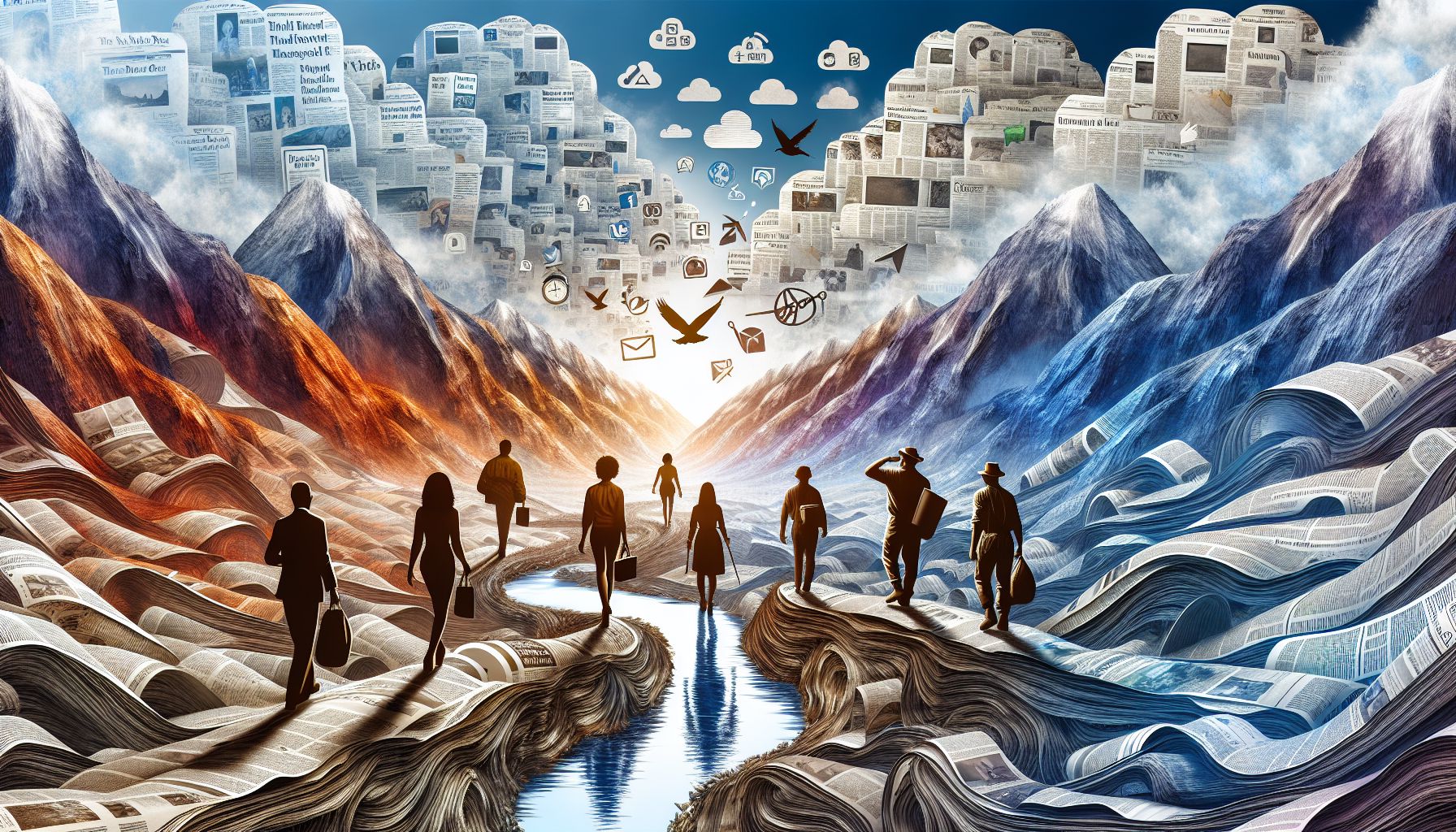
newspapers, for the one thing the Web has created is a wealth of
independent news coverage and analysis, sources that are increasingly
sophisticated and reliable whilst offering a wide range of
interpretations of events without compromising fundamental principles
of honesty and integrity.
Underpinning this approach is the importance of critical thinking which
relies on being fully informed about events. Without the ability to
think critically about events, we remain passive consumers, unable to
assess events and their causes. Thus the emergence of an independent,
web-based media should in theory at least, aim to encourage and develop
critical thinking. Ranting at the enemy is all well and good but in
order to have confidence in our ability to develop an alternative
depends entirely on having a real understanding of what’s going on in
the world and why.
In this regard it would be useful to know to what extent people are
actually turning to the independent media. Empirical observations
inform us that increasingly people are
turning away from relying on the MSM and getting their news and
information from the Web but how many are they and what kind of news
and information and in turn how is it affecting their view of the world
and the decisions they make about for example, the political process?
As far as I know, studies of this kind have not been done. My own,
totally unscientific survey reveals that the global readership of
independent media sources runs into many millions, perhaps even tens of
millions. My own Website for example, has almost one million pages a
month viewed but this doesn’t tell me much, if anything about how many
people this represents nor does it tell me anything about the impact it
has on their opinions or more importantly, their actions.
In the UK, recent surveys indicate that distrust of the government has
people turning back to the Tory Party. My suspicion is that this is not
based on support for the Tories but rather a rejection of the Labour
government and its policies, in other words a negative reaction rather
than choosing a positive alternative simply because one doesn’t exist.
This was echoed in the recent US elections and it’s reinforced by the
low level of voter participation in both countries.
What this also reveals is the rejection of the political process
itself, and paradoxically, this is also reflected in the nature of the
way the independent media itself is organised; fragmented and
unconnected, with no overall theme or approach revealing that the left
itself is fragmented and disorganised reflecting that it is still
thinking and acting as it did in the previous century.
The pressing question for us is how to overcome this state of affairs
whilst maintaining a diversity of views and opinions. The last thing I
would want to see is a return to the old, dogmatic methods where there
was only one, correct way of doing things.
Hopefully the current situation is a formative period during which
these questions are being addressed and out of which a new way forward
will develop and there are signs if not in the so-called developed
world of this happening. I refer specifically to events in Latin and
Central America, the question for us is whether these developments are
relevant to our situation? They certainly give us hope that the
struggle continues and in novel and so far very effective forms.
Can we learn from them? Are we willing to? My eternal optimism would
like to think so especially the emergence of what I call
self-organisation, itself an expression of an increasing political
sophistication that promises the creation of entirely new kinds of
political formations but ones which are firmly rooted in our traditions
and what we have hopefully learned from past mistakes.
This view is reinforced by the increasingly vitriolic attacks being
made in the capitalist media on these developments, for even if we are
not being moved by these events, the capitalists surely are! They also
contradict the oft-repeated myth that socialism is dead and buried. I
prefer to view the period since the early 1990s as one of licking our
wounds and regrouping for the struggles to come.
Is this merely wishful thinking on my part? I think not as history
shows that struggle never stops. It may suffer defeats and reversals
and even periods of deathly quiet but over historical time, revives and
gains in strength.
The current period is especially critical for we are confronted with a
unique situation, climate change, that is itself directly the result of
the capitalist economic order and there are signs that the connection
between the two is being made by increasing numbers of people and even
some countries.
The capitalist class is of course trying to pass the responsibility to
us but in so doing it is revealing the fundamental contradiction of
personal ‘belt-tightening’ whilst maintaining an economic system of
continual economic growth based on useless consumption. Sooner or later
the futility of trying to maintain capitalism and the construction of a
sustainable and just economic system will be revealed and indeed there
are already signs indicating just this.
Media talk of ‘resource wars’ is one expression of the connections
being created by the capitalist class as is all the talk of ‘peak oil’,
‘energy security’ and ‘over-population’. But no matter how
sophisticated the propaganda is it cannot hide the devastating effects
of climate change, especially its impact on the poor of the planet and
sooner rather than later, the climate change chicken will come home to
roost.
Rather than be taken in by these myths as some on left have been, we
have to articulate a vision of an alternate economy based on a rational
and sustainable utilisation of resources, made all the more critical by
the realisation that the major effect of climate change is going to be
on the production of food and the impact rising sea levels is already
having the millions people who live in low lying areas of the planet.
Will we in the developed world continue to stand by and allow billions
to be spent on wars of aggression whilst millions are uprooted and
forced to relocate to who knows where? The results don’t bear thinking
about so disastrous will the result be unless we develop a global
response to these catastrophic events. Be assured that the capitalist
world will not lift a finger, rather it views such developments as
beneficial to maintaining its grip on the planet and its resources. Its
only concern is the degree to which climate change will impact on its ability to survive.
Thus in the UK for example, reducing energy consumption is not
accompanied by any attempt at altering our transport policies or indeed
the production and consumption of consumer products, all of which
consume vast amounts of energy and resources, if not here then
somewhere in the global circuit of capitalist production and
distribution. The real effects of capitalist production is therefore
hidden under the guise of ‘energy efficiency’ and guaranteeing our
‘energy security’.
The left desperately needs to connect the crisis of climate change to
the crisis of capitalism and indeed its assault on the planet, by
revealing the connections between all these events and proposing an
alternative. We surely have no other choice unless we want to side with
the ruling elites and maintain our position of privilege at the expense
of the great majority of the planet’s people.